

Hoi An is a living museum reflective of one of the most active Southeast Asian seaports of the 15th –19th centuries. Whilst the port was officially established in 1595, signs of human habitation can be found dating back 2,200 years. The town’s original street plan and gorgeous architecture have been maintained despite urbanization, with more than 800 preserved ancient buildings to marvel at.
- Tailor Shops
- Silk Lanterns
- Art Street
- Amazing Local Food
- Explore Rice Fields and Tra Que Village
 More tips
 How to get around
 How to get there
 Food & Drinking
 Best hotels & Hostels
 15 best things to do
 Best time to visit

Located in Quang Nam province, Southern Central Vietnam, Hoi An weather is affected by the tropical monsoon climate. Hoi An climate is divided into 2 seasons: the dry season from February to August and the wet season from September to January. The weather can be described as hot with a lot of sunshine and humid with much rainfall during the year.
The average annual temperature in Hoi An is about 25.6OC, with the highest temperature reaching 39.8OC from June to August and the lowest temperature dropping to 22.8OC. From November to January, Hoi An temperature varies from 19 to 24OC.
The dry season starts in February and ends in August. From February to April, Hoi An weather is mild and beautiful with light sunshine and less rain. From May to August, Hoi An is surrounded by warm sunshine and little rain. This is the best time to visit the famous beaches in Hoi An.
The wet season takes place from September to January. During the wet season, there are many heavy rains together with typhoons and sometimes floods. This is the off-peak season in Hoi An. If you want to visit Hoi An in this season, don’t forget to check Hoi An weather forecast constantly.
The dry season is definitely the best time to visit Hoi An, as low rainfall, light sunshine and low humidity make it convenient for visitors to move to different destinations and participate in outdoor activities. More specifically, the ideal time to visit Hoi An is from February to April when Hoi An weather is cool and pleasant. This is also not the peak tourism season, thus Hoi An is less crowded.
 The best time to visit Hoi An is from February to April (Source: Collected)
If you want to travel on a budget or enjoy a less touristy Hoi An, you should not overlook Hoi An in the wet season. There will be fewer tourists during this season, thus the price of airplane tickets, hotel and restaurant services are more reasonable. Moreover, visitors can discover a different beauty of Hoi An on rainy days, relax and explore its famous destinations with more comfort.
1. Go Sightseeing in Old Town
Kicking off our list of things to do in Hoi An is the famous Old Town. The whole area is basically a living museum with an interesting blend of cultures. On just a short walk around Hoi An Old Town, you’ll stroll past a French colonial house, cross a Japanese bridge, and pop into a Chinese temple.

Figuring out what to do in Hoi An Old Town can be a bit tricky. It really is an Old Town, and the rapid development of tourism here has put a strain on the place. First of all, every visitor needs to purchase an entrance ticket. These cost 120,000 VND and are valid for the duration of your stay. I recommend buying the ticket straight away and just keeping it on you. Just be sure not to lose it!
Before you go griping about the entrance ticket, just know that a vast majority of the cost goes towards maintenance and renovations.
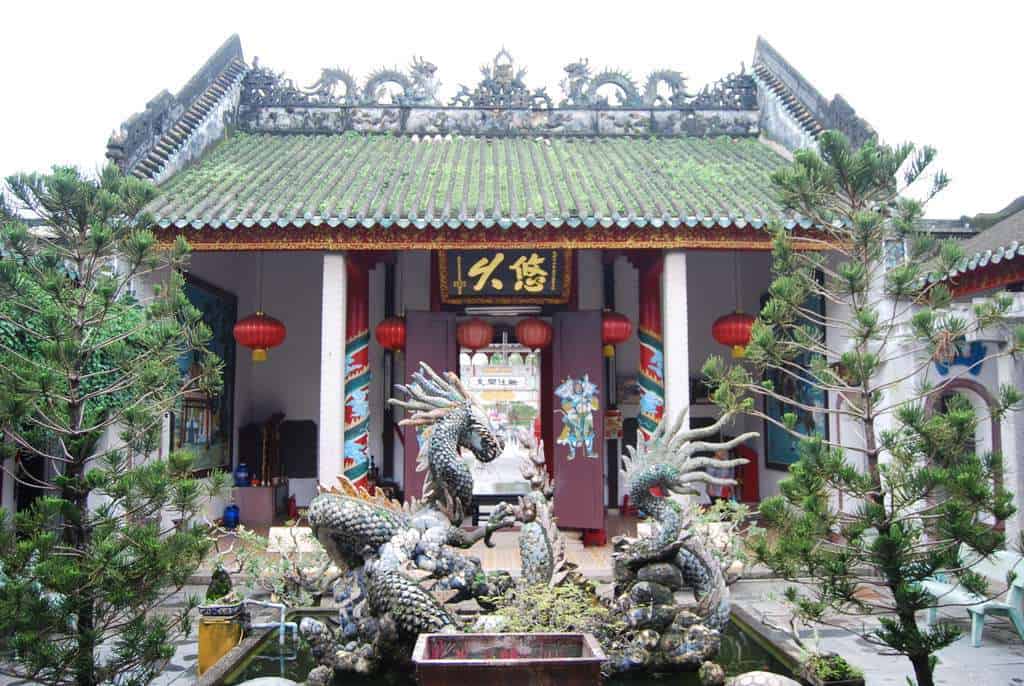
One of the many sights in the Old Town.
With your ticket in hand, you’re ready to check out some of the top things to do in Hoi An. It grants you access to five of the 22 cultural and historical sights around the UNESCO World Heritage Site of the Old Town. There are lots of things to see in Hoi An Old Town. You can choose between old houses, museums, temples, pagodas, art centres, and more.
This entire guide could be on the various sights of Old Town, but there’s so much more going on in Hoi An. I recommend checking out the Japanese Covered Bridge first and then just wandering around the Old Town. Some of the attractions may catch your eye while others may seem boring. It’s nice to have options! On our visit, we saw a mixture of sights spread out over a few days. Even though tickets may say they’re only good for 24 hours, no one should hassle you about it so long as you actually have a ticket.
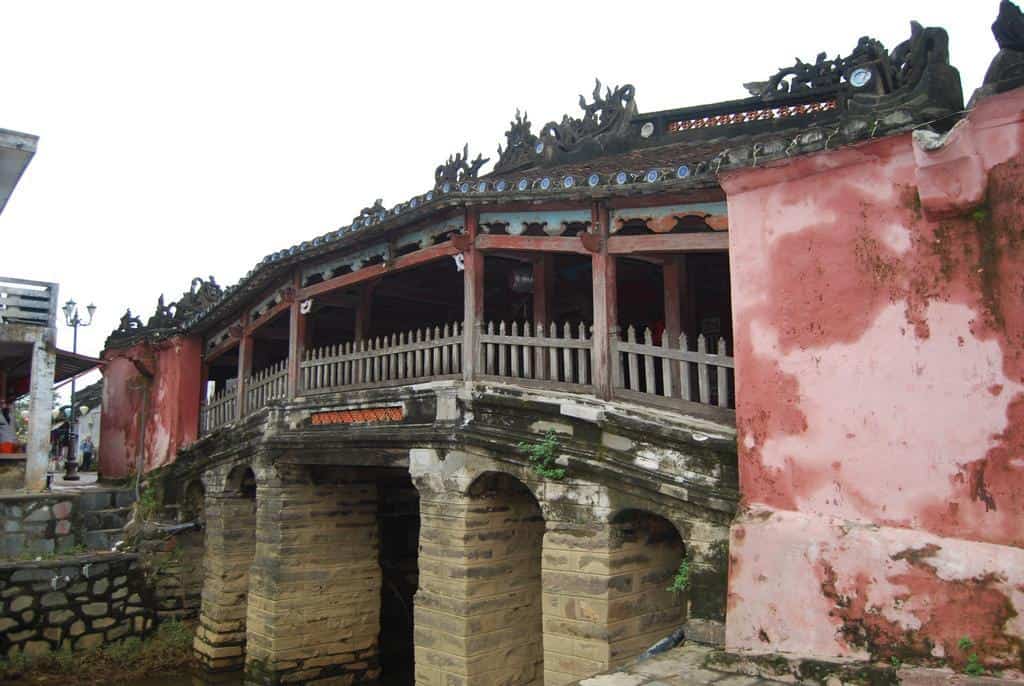
The famed Japanese Covered Bridge in Old Town.
2. Visit a Tailor
While Hoi An was once a major trading port, these days its primary industry seems to be tailoring. In fact, it seems like every other shop here is a tailor. If you’re looking for a custom-made suit, dress, or new pair of shoes, this is the place to do it.
When it comes to shopping in Hoi An, you definitely get what you pay for. With so many shops, it’s inevitable that some of them are not the greatest quality. Yaly Couture, BeBe, and Thu Thay are all good choices.
3. Go on a Hoi An Free Tour
Without a doubt, one of the coolest things to do in Hoi An is taking the free tour. This is run by local university students and is a really fun way to spend a morning. Their popular free bike tour takes you over to a small island on a ferry. Once there, you’ll cycle around to different workshops to see how locals make a living.
These tours are a win-win for travellers and the guides. They’re studying tourism and trying to practice their English, while you’re looking for an authentic local experience. The free bike tours operate on Tuesday, Saturday, and Sunday. You’ll just need to cover your own bike and ferry ride, which will only set you back a few bucks.
They run several other tours that are very reasonably priced as well. You can check out all the options on their website.
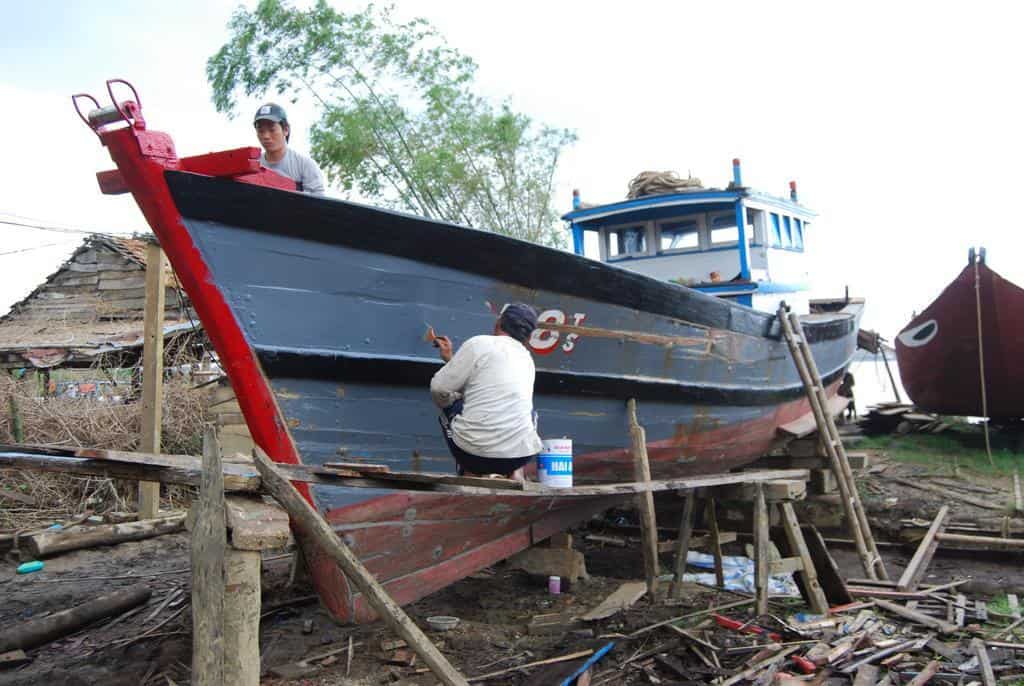
Visiting a boat-maker is just one part of the tour.
4. Take a Ride in a Basket Boat
Ever heard of a basket boat? I didn’t think so! It just so happens that riding in one of these is one of the top Hoi An activities. These are basically round baskets made of bamboo that locals use to navigate the waterways in the area. On a half-day tour, you can cycle out to the village and try paddling one yourself. Cruise through a lush forest of coconut trees, try your hand at net fishing, and then watch the locals have a cheeky race.
5. Check Out the Local Markets
One of the top things to do in Hoi An is simply perusing a local market. These are the best places to shop for souvenirs at a bargain price and indulge in some delicious Vietnamese food. The Hoi An Night Market is a popular choice among travellers. Overlooking the Thu Bon River and illuminated by hundreds of lanterns, this local market certainly is a scenic place to shop and eat!
Other than the Night Market, the Central Market of Hoi An is a great place to go to eat local dishes on a budget.

Local food is always the best.
6. Eat All the Things
Speaking of eating, be sure to come hungry when you visit Hoi An! The town is famous for its cuisine and is thought of as the food capital of Vietnam. Some of the local dishes that you have to try include banh bao vac, which means “white rose.” These delectable shrimp dumplings are wrapped to resemble a rose and they’re damn good!
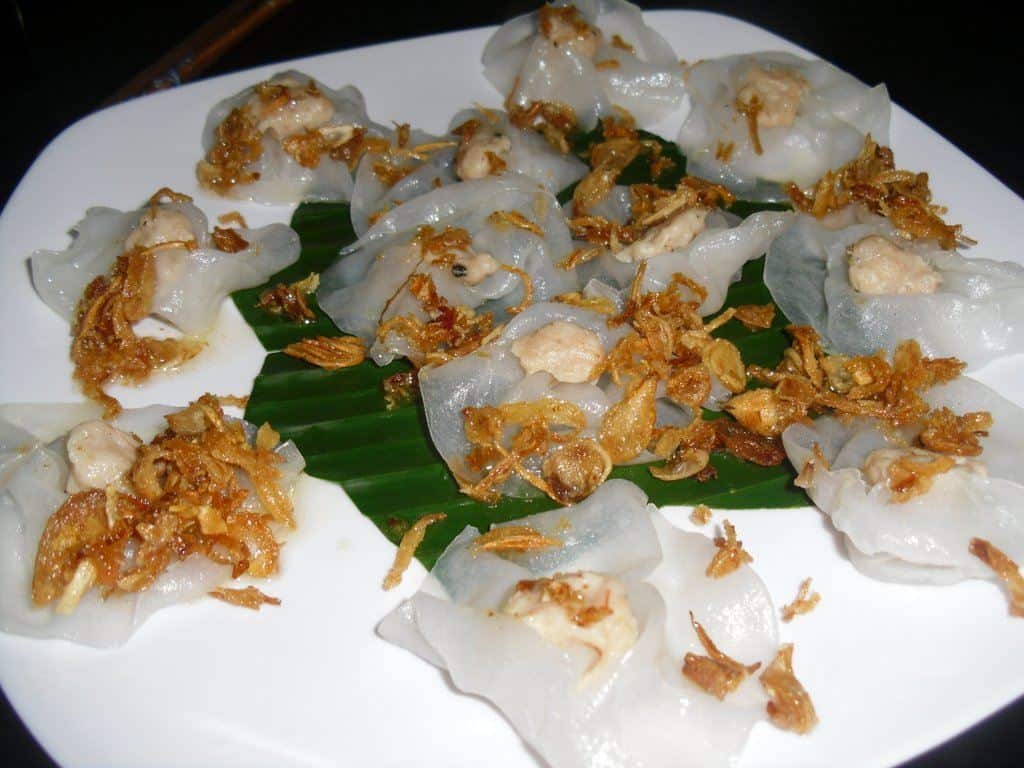
Trying the local specialty – White Rose dumplings.
7. Take a Cooking Class
Do you know what’s even better than chowing down on tasty Vietnamese food? Chowing down on tasty Vietnamese food that you actually cooked yourself! Taking a cooking class is definitely high on the list of things to do in Hoi An. There are several places offering cooking classes in Old Town.
One excellent choice is the Grandma’s Vietnamese Home Cooking Class tour. A short boat ride takes you to an island, where you’ll meet a local family. After visiting an herb garden and learning how to make your own rice paper, it’s time to get cooking! You’ll make four dishes such as bahn xeo and papaya salad and then sit down to a feast.
8. Attend a Hoi An Memories Show
One of the top Hoi An attractions is a new theme park that’s home to the most ambitious show in all of Vietnam. Hoi An Impressions is a theme park focused on the history and culture of the city, where all of the staff members are time-period performers. It’s also home to the absolutely epic Memories Show, which has a cast of over 500!
You can choose to visit only the park (300,000 VND) or see the show (600,000 VND for adults), or you can get a combo ticket (800,000 VND). The park is open from 5-9 PM while the show happens from 7:30-8:45. It’s open every day but Tuesday so plan accordingly.
9. Enjoy a Sunset River Cruise
Wondering what to do in Hoi An for a romantic evening? Look no further than a sunset river cruise! There are a variety of options for taking a sunset cruise in Hoi An. Choose from a cocktail cruise to a private dinner cruise with a 5-course menu. Just about everyone in town can help you get on a cruise of the Thu Bon River, but you can also book one online if you prefer.
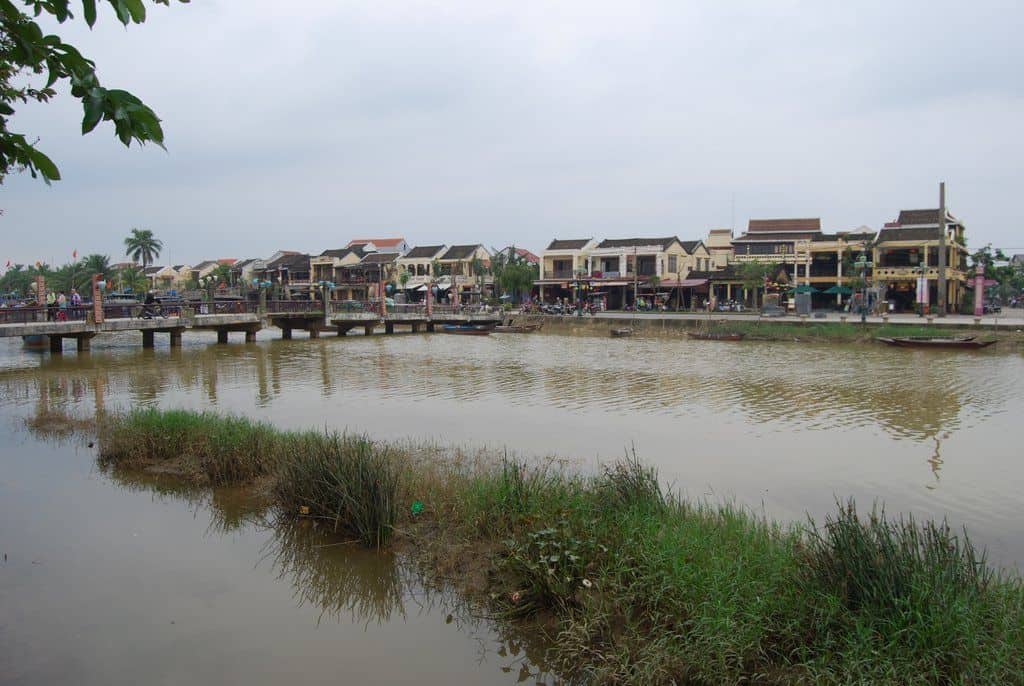
Hanging out down by the river.
10. Attend a Lantern-Making Class
Of all the amazing things to see in Hoi An, the bright and colourful lanterns really stand out. These are symbols of happiness, wealth, and luck and are all over the town.
You’ll see plenty of lanterns while walking around, but did you know you could also try making your own?
11. Release a Lantern
Walk around the Old Town in the evening, and you’ll see that one of the most popular things to do in Hoi An Vietnam is releasing lanterns in the river. To be clear, I’m not talking about the nice lanterns that hang around town or the one you made in the class. These are small paper lanterns that you can buy for less than a dollar.
Traditionally, this only happened on the eve of the full moon. With the development of tourism in Hoi An, this now happens on a nightly basis. It may be mostly for tourists these days, but it doesn’t make the scene any less beautiful!
12. Drink Bia Hoi
One of my personal favourite things to do in Hoi An is just sit by the river and enjoy a few glasses of bia hoi. This “fresh beer” is delivered to restaurants and bars daily in small kegs, so it’s not just a clever name. In addition to being a crisp, refreshing brew, bia hoi is also dirt cheap. Seriously – you can get a few glasses of this stuff before your bar tab hits a dollar.
Find a riverside bar, order up a round with a few snacks, and enjoy the scenery of this gorgeous town.
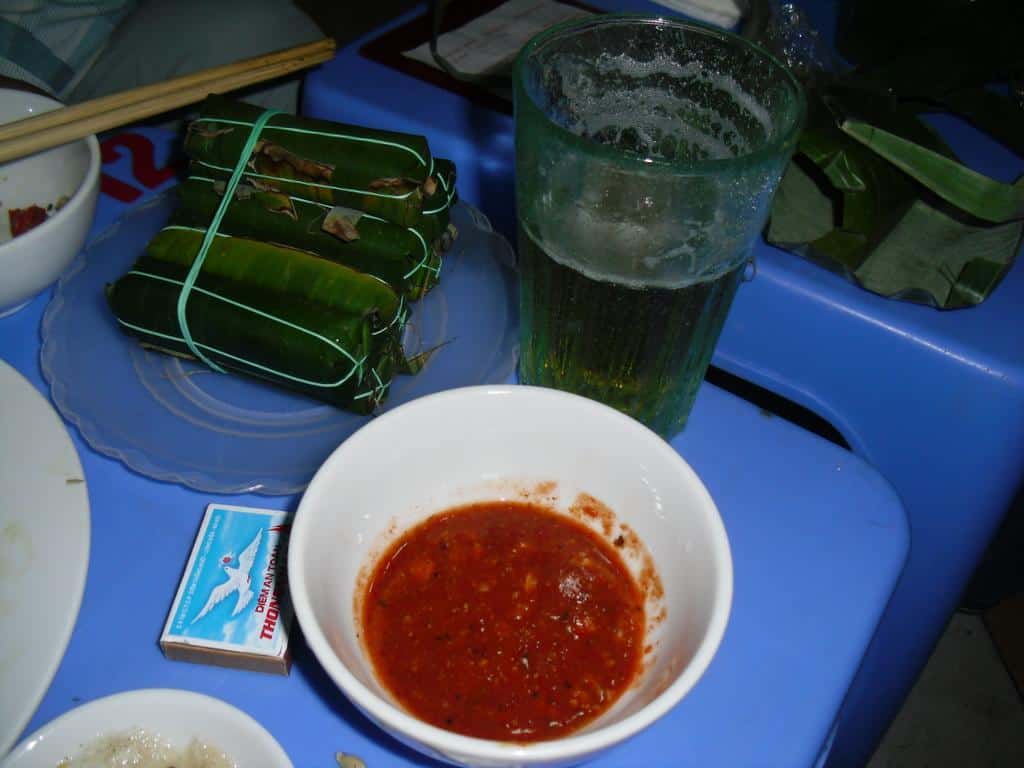
Mmmm… bia hoi.
13. Treat Yourself
Once in a while, you just have to treat yourself when travelling. All those long bus rides, sleepless nights in hostels, and arduous days of trekking take a toll. Thankfully a spa day is a very affordable thing here in Hoi An.
14. Day Trip to My Son
One of the most popular day trips from Hoi An is the archaeological site of My Son. This UNESCO World Heritage Site is a cluster of Hindu temples built by the Champa Kings. Unfortunately, tremendous damage was done to the temples during the war. The good news is that there’s still plenty to see here and it’s far less crowded than places like Bagan or Angkor Wat.
You have several options for visiting My Son, including just getting yourself there on a motorbike. This is a good option if you’re comfortable riding but maybe not so great for beginners.

Exploring the ruins at My Son.
15. Visit Tam Thanh Mural Village
If you enjoy street art, then one of the top things to do in Hoi An is visiting the Tam Thanh mural village. This art project is a collaboration between Vietnam and South Korea, where mural villages have been a huge hit. A group of Korean and Vietnamese artists worked together to paint over 100 of the homes here. What once looked just like every other coastal fishing village a few years ago is now a colourful work of art.
The murals have brought in tourists, which has led to increased business opportunities for locals. If you visit, consider putting your money directly into the community whether it’s buying a coffee or handmade goods.
The closest airport to Hoi An is Da Nang International Airport (DAD), located in the heart of Da Nang City. It is 30 kilometres from Hoi An.
The small airport is overloaded and barely able to handle current volumes. If departing from DAD, arrive early or on time as the queues for check-in and security can be long. A badly needed new terminal is under construction, optimistically slated to open in 2017 at the cost of 3.5 trillion dong (that’s US$158 million). Whether the seagull-shaped design does anything to create efficiency remains to be seen.
Sample destinations
Domestic
Buon Ma Thuot (Vietnam Airlines)
Can Tho (Vietnam Airlines)
Da Lat (Vietnam Airlines)
Cam Ranh/Nha Trang (Vietnam Airlines)
Hanoi (Jetstar; VietJet Air; Vietnam Airlines)
HCMC (Jetstar; VietJet Air; Vietnam Airlines)
Pleiku (Vietnam Airlines)
Vinh (Vietnam Airlines)
International
Bangkok (Bangkok Airways, Vietnam Airlines)
Beijing (China Eastern)
Hong Kong (Dragonair; Hong Kong Express)
Kunming (China Eastern)
Macau (Air Macau)
Seoul (Korean Air)
Siem Reap (Silkair, Vietnam Airlines)
Singapore(Silkair; Jetstar)
Tokyo (Vietnam Airlines)
The airport has ATMs outside the arrivals hall, as well as money exchange, a few eateries and usually booths selling SIM cards (Vinaphone, Viettel).
To get a taxi, exit the airport and walk 30 metres to the stand. From the airport the journey to Hoi An takes about 30 minutes and by the meter, it should cost no more than 300,000 dong, depending on your drop off point. The green Mai Linh or Vinasun taxis are considered the most reliable. Arranging a private transfer with your guesthouse can sometimes be cheaper, 220,000 to 250,000 dong one way. If going from Hoi An to the airport, negotiate with the driver for this price.
There are a few horror stories about taxi drivers stopping off to pick up a “friend” who will try to encourage you to stop off at his sister's tailor/shoe/souvenir shop along the way, but this is a rare occurrence. If it does happen be firm with your driver and leave the “friend” roadside.
The other “scam” is usually not a scam at all and involves your driver unable to find your hotel. There are so many hotels in Hoi An with similar names that especially sound the same when spoken with a Western accent. The driver genuinely is trying to find you hotel so they will phone a friend to ask or accidentally take you to the wrong hotel. To avoid this confusion, write down the hotel name, address and phone number and give it to your driver.
To save a few dollars, companies do shared air-con minibus shuttles to Da Nang train station and airport, departing every hour from 04:00-22:00, takes 1 hour, costs 110,000 dong per person. Must be booked in advance, which a travel agent or hotel can do for you.
Bus service to Hoi An is limited as most long distance buses head to the major hub Da Nang; from here you can take the local bus, xe om or taxi to Hoi An. Open bus tour companies or deluxe buses direct to Hoi An are usually the best option, saving you from the extra step in the journey.
The Sinh Tourist open tour bus: 587 Hai Ba Trung St; T: (0510) 386 3948; hoian@thesinhtourist.vn; https://www.thesinhtourist.vn; open daily 06:00-22:00.
Da Nang: Departs at 08:30, 13:45. Costs 99,000 dong and takes 45 min.
Hue: Departs at 08:30, 13:45. Costs 119,000 dong and takes 4 hrs.
Nha Trang: Departs at 18:15. Costs 299,000 dong and takes 13 hrs.
Da Lat, Mui Ne or HCMC: via Nha Trang.
Other sample destinations
Da Lat: Departs at 17:15. Costs 290,000 dong.
Da Nang: Departs hourly. Costs 110,000 dong and takes 45 min.
Dong Hoi: Departs at 13:30. Costs 250,000 dong.
Hanoi: Departs at 13:30. Costs 290,000 dong.
HCMC: Departs at 17:00. Costs 380,000 dong.
Hue: Departs at 07:30, 13:30. Costs 60,000-70,000 dong and takes 4 hrs.
Nha Trang: Departs at 17:00. Costs 200,000 dong and takes 13 hrs.
Mui Ne: Departs at 17:00. Costs 290,000 dong.
Phong Nha: Departs at 13:30. Costs 250,000 dong and takes 7.5 hrs. Otherwise, take local bus from Da Nang station.
There is a small bus station in town with departures to the north and south. It’s located west of the town centre on Nguyen Tat Thanh Street, at the corner of Le Hong Phong Street. One might assume that you can save big by catching a local bus here rather than booking something in town but it will likely turn out to be more money, hassle and frustration. Consider opting for a tourist minibus or deluxe bus even for shorter trips, like to Hue. If you’d still rather take the do it yourself approach, then take the local bus to Da Nang station and you’ll have far more options.
The yellow local bus to Da Nang costs 20,000 dong per person, 30,000 dong with luggage, but beware that drivers are notorious for trying to get more from foreigners. The buses run from 05:30-17:30, every half hour and take around 45 minutes. The route is as follows: Hoi An bus station; Tran Dai Nghia; Le Van Hien; Ngu Hanh Son; Cau Tran Thi Ly; Nui Thanh; Trung Nu Vuong; Bach Dang; Phan Dinh Phung; Yen Bai; Le Duan; Dien Bien Phu; Ton Duc Thang; Da Nang central bus station.
Yet another do-it-yourself option: Get to the nearest town along Highway 1A, which is Vinh Dien, 10 kilometres west. There is no bus service to the town from Hoi An, a xe om should cost 50,000 dong. It’s a matter of standing by the road and flagging down a south-bound bus to your destination. But really, the saner way is just go to Da Nang and get the bus to where you want to go from there.
If you’re in a bus station elsewhere in Vietnam and trying to get to Hoi An, be skeptical of sellers and touts trying to put you on a bus that says Da Nang, Tam Ky or somewhere else, while claiming that they will stop in Hoi An. What will likely happen is you’ll get dumped at the side of Highway 1A, kilometres away from Hoi An, and left to make your own way from there. Be suspicious unless you see the ticket booth advertise Hoi An or it’s written on the bus window.
Through buses to Laos are available and go via Hue and the border at Lao Bao. Alternatively, there is the Bo Y border, which is 82 kilometres northwest of Kon Tum. Be warned that the buses to Laos are usually in terrible condition and crashes (and fatalities) occur with alarming regularity. Even if you do pay extra for a better class bus, you'll be put on whichever one is working at the time. In our experience (and if you can’t afford to fly) you are better off making your way to Hue and booking a minibus to take you to the border.
Minibus: A few companies run an air-con minibus shuttle between Hoi An and Da Nang train station and airport, departing every hour from 04:00-22:00, takes 1 hour, costs 110,000 dong per person. A travel agency or hotel can book it for you.
The closest train station is in Da Nang. At the station you won't have any trouble finding a xe om to take you to Hoi An – if anything, you'll likely have to fend off willing drivers. Expect to pay around US$8. A stop at the Marble Mountains on the way will cost you an extra US$2.
On Foot
Hoi An is quite a small place so you can walk everywhere quite easily. Most of the hotels are concentrated in the downtown area within walking distance to restaurants, coffee shops and attractions.
Bus
There is a regular bus service to/from Danang but most peole take one of the minibuses that run between Hoi An and Danang, Hue or Nha Trang. Most hotels will be able to arrange a ticket.
Taxi
Danang Private Taxi (+84) 093575 3336
Taxi Mai Linh: Tel: (84-510) 3. 914914
Taxi Hoi An: Tel: (84-510) 3. 919919
Taxi Faifoo: Tel: (84- 510) 3 91 91 91
Cycle
You can refer to the TripAdvisor HoiAn forums for rental information
Car & Driver
Hotels in Danang will be able to organise a car and driver to take you on a day trip to Hoi An, stopping at Marble Mountains on the way.
Boats
Hiring a rowboat with oarsperson is a pleasant way to spend a couple of hours, or you can take a motorised launch.
You can take a taxi. It costs around 12.000 VND-15.000 VND/ 1 Km.
Go to Cham island by high speed boat - Location: At Cua Dai port; duration: 30 minutes; buy ticket at Hoi An travel agent, hotels or online. Fee: 150.000 VND- 250.000 VND/ 1 one way
You can also go to Charm Island by local ferry